
After two years of seeing AI being used in the workplace, I have noticed something strange. People are delivering faster as individuals, but as a team we aren't actually working more efficiently than before. The gap between individual and team productivity is real, and it keeps getting bigger.
Nobody can deny that AI agents have made us more productive. Developers ship code faster. Designers iterate on designs quicker. PMs are reviewing documents in half the time they used to and are writing requirements like never before. Nobody seriously argues with this part anymore.
But coordination, the messy art of keeping a team aligned, looks almost exactly like it did five years ago. Everyone is still piecing together their own tribal knowledge of what’s going on by manually extracting information from a scattered set of tools: Confluence, Jira, Slack, GitHub, meeting notes, SharePoint… The fact that we now do that with an AI assistant alongside us doesn’t change that we have to keep piecing all that information together in our heads, again and again.

Giving everyone their own AI assistant didn’t solve the problem. It made it even worse. Each person opens their favourite AI assistant, copy pastes information from a scattered set of tools, and ends up with their own version of what is true. Six people on the same team end up with six versions of reality, all slightly different, all confident they are right. Nobody is aware the conflict exists, until it is too late and needs to be fixed.
It is clear that something has to change in how we coordinate and collaborate in the age of AI. The faster everyone gets individually, the more diverse tasks are and the larger the team, the more obvious the coordination problem becomes.
What teams actually need is something shared they can all collaborate on. A picture of the work that anyone can read, contribute to and extend. A place where any new information becomes immediately available to the rest of the team. Not a document somebody writes that never gets updated and nobody reads. Something alive and up to date with reality. Something the team builds together and contributes to as the work moves forward. A shared context layer where all relevant information is immediately available for the task at hand.
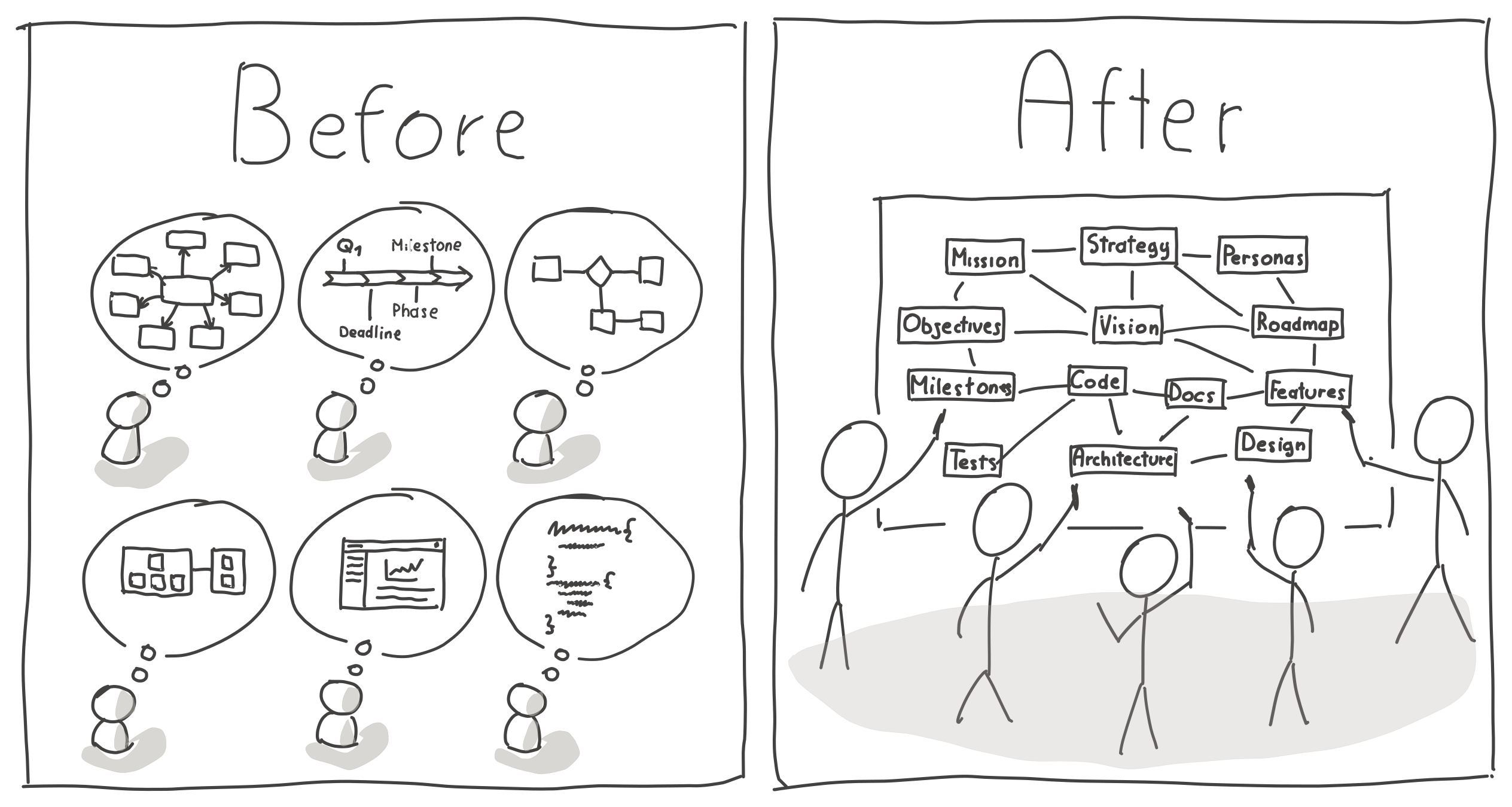
Once that picture exists, the AI tools everyone's already using can finally help the whole team, not just the individual. The AI assistant in front of one person sees the same picture as the AI assistant in front of another. Coding agents see the history of why a feature needs to be added and inconsistencies can be detected earlier. Suggestions are based on what the team actually knows, not on what one person happened to piece together on their own.
I have seen this happening for a while now, and it feels like the coordination problem is only getting worse. If you are noticing the same thing on your team and want to exchange ideas on how to collaborate better in the age of AI, reach out so we can learn from each other about what to do next.
Kristof Martens,
Co-founder of Expedait. Fifteen years inside enterprise product organisations watching the coordination problem get worse. Doing what I can to fix it.